



Atlantic lantern fish specimen
Atlantic lantern fish (scientific name: Anomalops katoptron, family name: Anomalopidae) is a unique deep-sea luminous fish in tropical and temperate waters of the Atlantic Ocean. It is famous for its unique luminous organs and is called "flashlight in the ocean". It belongs to the family of the order lantern, containing about 5 genera and 20 species, such as the Atlantic lantern fish and the southern lantern fish. It is mainly distributed in the tropical to temperate waters on the east and west sides of the Atlantic, such as the Gulf of Mexico, the Caribbean Sea, the coast of Brazil and the waters of West Africa, and inhabits complex structural areas such as coral reefs, rocks or shipwrecks.

Asian Loach Specimen
Asian Misgurnus anguillicaudatus (scientific name: Synbranchidae family, representative species such as eel Monopterus albus) is a kind of freshwater benthic fish distributed in tropical and subtropical regions of Asia. It has the ability to highly adapt to hypoxic environment and is often called "rice field fish" or "swamp eel". It belongs to the family Gracilidae, containing about 15 genera and more than 100 species, mainly distributed in the freshwater basins of East Asia, Southeast Asia and South Asia. Widely distributed in the Yangtze River, the Pearl River Basin in China, the Mekong River, the Irrawaddy River in Southeast Asia and the rice fields, swamps, rivers and ponds in the Ganges Plain of India.

Asian red-tailed catfish specimen
Asian red-tailed catfish family, scientific name: Bagridae family, representative species such as long snout) is a class of carnivorous benthic fish distributed in freshwater waters of Asia, because its tail is often red or dark stripes and named, is a typical representative of the catfish family. It belongs to the family Siluriformes, containing about 20 genera and more than 100 species, which are widely distributed in the freshwater basins of East Asia, Southeast Asia and South Asia. It is mainly distributed in the Yangtze River, Yellow River and Pearl River basins in China, the Mekong River and Salween River in Southeast Asia, and the Ganges River and Brahmaputra River basins in India. It is common in the bottom of rivers, lakes and swamps.

Asian leaf fish specimen
Leaf fish family, Asian leaf fish (scientific name: Nandidae family, representative species such as Nandus nandus) is a kind of ambush fish distributed in the freshwater waters of South Asia and Southeast Asia. It is named because its body color and shape resemble fallen leaves. It is a model of camouflage strategy in natural evolution. It belongs to the family of Osteoglossiformes, including 3 genera and about 15 species, such as Asian leaf fish (Nandus) and multi-spiny leaf fish (Polycentropsis). Mainly distributed in India, Bangladesh, Myanmar, Thailand, Malaysia and other rivers.

armadillo specimen
Armadillo, Armadillo (scientific name: Cingulata, family name: Dasypodidae) is a unique mammal living in the Americas. There are about 20 species. Its iconic feature is the bone plate carapace covering the whole body, which is called "living armor". Mainly distributed in Central and South America, north to the southern United States (such as the nine-banded armadillo Dasypus novemcinctus), south to Argentina. Belonging to the order Cingulata, it is closely related to the extinct eagle-toothed beast (Glyptodon) and is a unique branch of mammalian evolution in South America.

Water-shooting fish specimen
The archer (scientific name: Toxotes spp., family name: Toxotidae) is a unique fish distributed in tropical and subtropical brackish and fresh water junction waters, known for its "jet fishing" stunt, known as "nature's sharpshooter". It belongs to the family Perciforme (Perciformes) and contains five extant species, such as common archer (Toxotes jaculatrix) and pygmy archer (Toxotes lorentzi). Mainly distributed in Southeast Asia (such as Indonesia, the Philippines, northern Australia) coastal brackish water intersection.

Specimen of giant bone tongue fish
Giant bone tongue fish (scientific name: Arapaima gigas, name: Osteoglossidae) is a large ancient fish unique to the Amazon River Basin in South America, known as the "living fossil". It is the largest species in this family and is distally related to Asian elephant fishes (such as Osteoglossum bicirrhosum). It is mainly distributed in the freshwater basins of tropical South America, such as the Amazon River, the Orinoco River and the rivers and lakes of the Guyana Plateau, and is common in slow-flow or still-water areas (such as flood forests).

African Butterfly Fish Specimen
African butterfly fish (scientific name: Pantodon buchholzi, name: Pantodontidae) is a small carnivorous freshwater fish unique to Africa, with unique appearance and behavior habits. Belongs to the bone tongue fish (bone tongue general order) butterfly fish family, is the only existing genus of the family (Pantodon) representative species. It is mainly distributed in freshwater basins in central and western Africa, such as the Congo River, the Niger River, and the Benuer River. It is common in still or slow-flowing waters, such as lakes, swamps and river sections with dense water and grass.

African saury specimen
African saury (scientific name: Notopteridae, common species such as Xenomystus nigri) is a unique fish of the bow-fin family distributed in African freshwater waters. It belongs to the order of bone-tongue fish (bone-tongue general order) and is mainly distributed in rivers, lakes and swamps in West and Central Africa, such as the Nile and Congo River basins.

Specimen of Peacock Nymphalis
It is a medium-sized butterfly common in temperate regions of Europe and Asia. The base color of the wings is rusty red, and there are black, blue and yellow eye-like spots on the wing ends. These eye-like marks are their most prominent feature. The wings are dark brown or black on the opposite side, with a good concealment color. The larvae feed mainly on urticaceae plants, while the adults feed on nectar, sap and decaying fruit. It plays an important ecological role in nature and is an important part of the ecosystem in many areas. The eye markings on the wings suddenly unfold when they encounter a predator, and this bluff can often scare off predators and protect themselves from attack.

Specimen of Dahuang Butterfly
It is a medium-sized gray-brown butterfly. It is a typical peat and wet wasteland species. Its distribution range starts from northern England and Ireland, and extends eastward through France and Slovakia to most of Scandinavia. The adult flight period is usually between June and August, feeding on cruciferous plants. Males and females are similar in appearance, but females are slightly lighter in color. The eye spot on the underside varies with latitude, with few spots in northern Scotland and bright and sharply colored spots in England. Usually does not spread its wings to bask in the sun and likes to fly in gloomy weather, as long as the temperature is warm enough.

Yellow and blue macaw specimen
Also known as the blue and yellow macaw, it is a large parrot with a very bright appearance, a green forehead, bright water blue feathers on the top of the body, and rich dark yellow or light orange feathers from the back of the ears to the chest and abdomen. It inhabits the tropical forests of South America, especially the Valzea region, but is also found on land farms and in unflooded forest open areas. It is a climbing bird that likes to move in groups, foraging mainly in the morning and evening, and resting in the forest when it is hot at noon. It eats a lot of fruit, flowers and insects, has a powerful beak that pecks open nuts and sucks out the pulp with a blunt tongue.
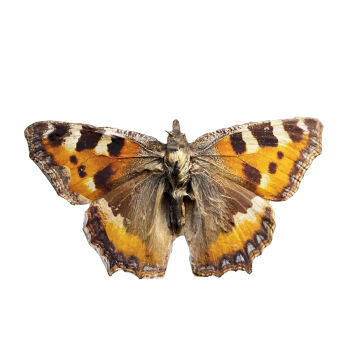
Nymphalid specimen of nettle
Also known as the small tortoiseshell butterfly, it is a butterfly widely distributed in Europe and parts of Asia. It feeds on plants of the Urticaceae family, hence its name. The wings are usually yellow and black markings, which are highly recognizable. The larvae feed on plants of the family Urticaceae, such as nettle and hemp. Survive in a wide variety of habitats. The adults hibernate in winter in March or April and are one of the first butterflies seen each spring. Females lay eggs in batches under the leaves of food. After about 10 days the eggs hatch and the caterpillars live in the silkscreen protection of the colony. The pupa is suspended from a plant stem or other object. Adult worms appear about two weeks later.
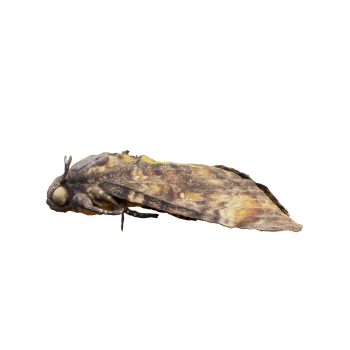
Dead Head Hawk Moth Specimen
is a large nocturnal moth known for its distinctive skull-like markings on the back of its chest. Widely distributed in parts of Africa, Europe and Asia. The body color varies from dark brown to yellow, but the most prominent feature is the skull-like pattern on its chest. The adults feed on the nectar of a variety of plants and sometimes enter the hive to steal honey. The larvae feed mainly on the alkaloid-containing plant leaves. It is active between dusk and midnight, is phototropic, and has a variable and unpredictable flight pattern. Male moths emit high-frequency squeals during courtship, a defense mechanism created by inhaling and expelling air.

Specimen of moth (brown spotted variant)
is a black variety of the spotted moth, known for its adaptive changes during the Industrial Revolution. Originally, this moth was white in color with black spots and was suitable for perching on unspoiled trees. However, with the advancement of industrialization, environmental pollution has caused the trunk to turn black, and the original white moth has become conspicuous in this environment, thus being threatened by predators. In the 19th century, as pollution increased, the number of carbon-colored varieties increased rapidly, especially in industrial areas. The phenomenon, dubbed "industrial blackening," has become a classic case of natural selection showing how species adapt to survive changes in their environment.

Specimen of moth (Carbophora)
is a black variety of the spotted moth, known for its adaptive changes during the Industrial Revolution. Originally, this moth was white in color with black spots and was suitable for perching on unspoiled trees. However, with the advancement of industrialization, environmental pollution has caused the trunk to turn black, and the original white moth has become conspicuous in this environment, thus being threatened by predators. In the 19th century, as pollution increased, the number of carbon-colored varieties increased rapidly, especially in industrial areas. The phenomenon, dubbed "industrial blackening," has become a classic case of natural selection showing how species adapt to survive changes in their environment.
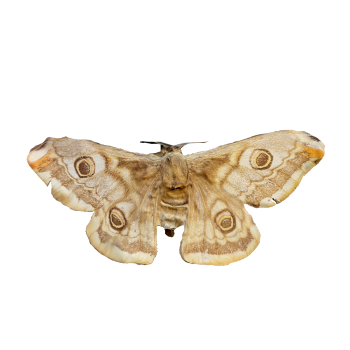
Monarch Moth Specimen
Also known as Sapium silkworm moth, is a huge moth, is one of the largest moths in the world. It is mainly found in the tropical and subtropical rainforests of Southeast Asia. The color of the wings is auburn, with a unique snake-head pattern, and the two black round spots at the tip of the wings are like snake eyes. This mimicry may be used to defend against natural enemies. It is nocturnal and feeds on the leaves of trees, especially the tallow tree, hence its name. The larval period will be spent in a cocoon with an extremely narrow opening, and the wings must be spread through the narrow cocoon hole, which helps their wings become bloodshot and ready for flight. Adulthood has a short lifespan, does not feed, and mainly mates and lays eggs.

Extremely Northern Curlew Specimen
Also known as Eskimo curlew, it is a medium-sized wading bird belonging to the curlew family of plovers. It has been widely distributed in North America, migrating to the Arctic in summer and to the Pembas steppe of Argentina in South America in winter. It feeds on insects such as grasshoppers and grasshopper eggs. The appearance is similar to other curlew, but the lower body has no markings and is smaller. In the migration will form a large group, with significant migration habits. Hunted on a large scale at the end of the 19th century, the wild extreme northern curlew is considered extinct since the 20th century. Over the past decade, there are still small feeder populations living in Canada and the United States that are classified as endangered.

Hedgehog specimen
Is a class of nocturnal mammals, belonging to the hedgehog family, widely distributed in Europe, Asia and Africa. The most striking feature of their rounded bodies is that their surfaces are covered with specialized spines of keratinized hair that stand up when they feel threatened, helping them defend themselves against predators. The eyes are small and divine, the nose is long, and the limbs are short but powerful, suitable for digging and climbing. The lifespan is about 3 to 5 years in the wild, and may be longer in captivity. It feeds mainly on the eggs of insects, worms, small mammals, and birds, and sometimes on plant foods. The spines are soft at birth, but they soon harden.

Starling Specimen
Active birds of Eurasia, Africa, and North America. It is of medium build, with a straight and pointed mouth, long and pointed wings, stout legs and feet, and usually black plumage with a metallic sheen. Good at imitating sounds, some species can even imitate human language, often in groups, noisy calls. Inhabitating in a variety of environments, including open, arboreal or terrestrial environments. Often nests are built in gaps in the walls of buildings, under eaves, and in tree holes. It feeds on the fruits and seeds of plants and also on insects. Is an important agricultural and forestry birds, can catch many pests, such as locusts, beetles, etc., the ability to adapt to the environment.

black turtle specimen
It is a medium-sized puffin belonging to the puffin family. Adult black guillemots usually have a black body, white wing spots, long, thin, dark beaks, and red legs and feet. In winter, the feather color is light gray, while the belly is white. Foods include eels, small fish, mollusks, crustaceans, insects, worms and other plants. Good at diving fishing, can dive to 9 to 30.5 meters deep waters in search of food. It is mainly distributed along the Arctic Ocean coast of Russia, Alaska, Canada and Norway, as well as eastern Canada, north to Greenland and south to the Atlantic Ocean of Britain, including the North Sea and Baltic Sea.

Barn Owl Specimen
Alias monkey-faced eagle, monkey-headed eagle, belonging to the owl-shaped grass owl family grass owl. It is a medium-sized raptor with a large and round head, a white face, a heart-shaped face, and an orange-yellow wrinkled collar around it. They are nocturnal birds, hiding in dark and hidden places such as ruins, attics, wall cracks, tree holes, rock cracks and bridge piers in rural towns during the day. Out at dusk and night activities, flying fast and powerful, almost no sound. He is a famous mouse catcher and can catch about 3 mice every day. In addition to rodents, they also prey on hares, small and medium-sized birds, frogs and larger insects, and occasionally fish. At present, it is listed as the second level of national key protected wild animals.

red squirrel specimen
is a small rodent known for its beautiful appearance and vivacious behavior. It is widely distributed in forests of Europe and Asia, especially coniferous forests and mixed coniferous and broadleaf forests. The body size is relatively small, and the coat color changes seasonally, usually reddish-brown in summer and becoming a more dense gray or taupe in winter, with a white or cream belly. Ears develop a tuft of ear feathers in winter, which is their unique feature. It is an arboreal animal that climbs, jumps and runs between branches, and feeds on nuts, seeds, pine cones and leaves. Have the habit of storing food, hiding food in tree holes or underground for winter use.

Kestrel specimen
is a small to medium-sized bird of prey with marked sexual dimorphism, with females approximately 20% heavier in size than males. It is widely distributed in Eurasia, North Africa, Atlantic islands, Japan and northern India, and is also distributed throughout China. Inhabit in a variety of habitats, including mountain forests, grasslands. Adaptable, some individuals can even breed in the city. It is a carnivorous bird that feeds on small mammals such as rodents and also preys on birds, frogs, lizards and insects. Has excellent vision and fast predation ability, often in the air or high to find prey, and can hover in the air. It is now classified as a national second-class protected wild animal.

Popular Models
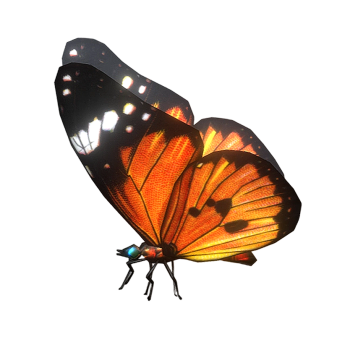
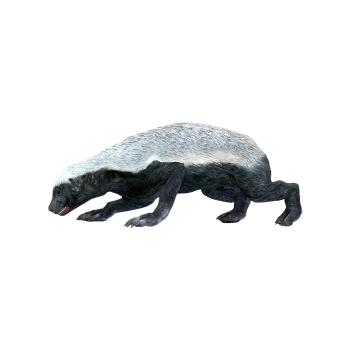
Honey Badger (3D animated model)
192 View
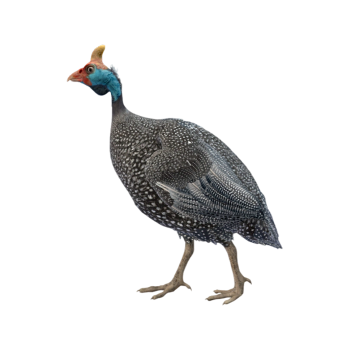
Guinea fowl (3D animated model)
163 View
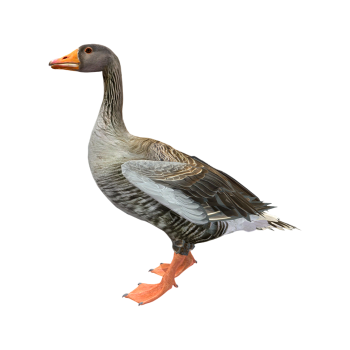
Wild Goose (3D animated model)
185 View
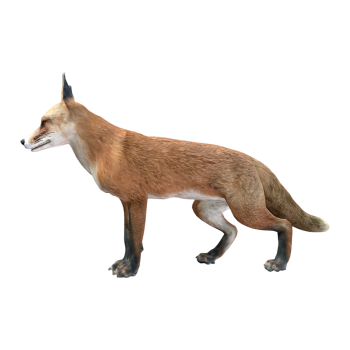
Red Fox (3D animated model)
153 View
Random Model

Vintage Wine Barrel
810 View


Ozawa Crab
856 View

Samsung Gear VR 2nd Generation
1025 View

Spanish Antique Toner Box
628 View


Stella's large manatee skeleton
965 View


Old Mississippi City Hall, USA
895 View

IPhone, Apple 14 Pro Max smartphone
1400 View